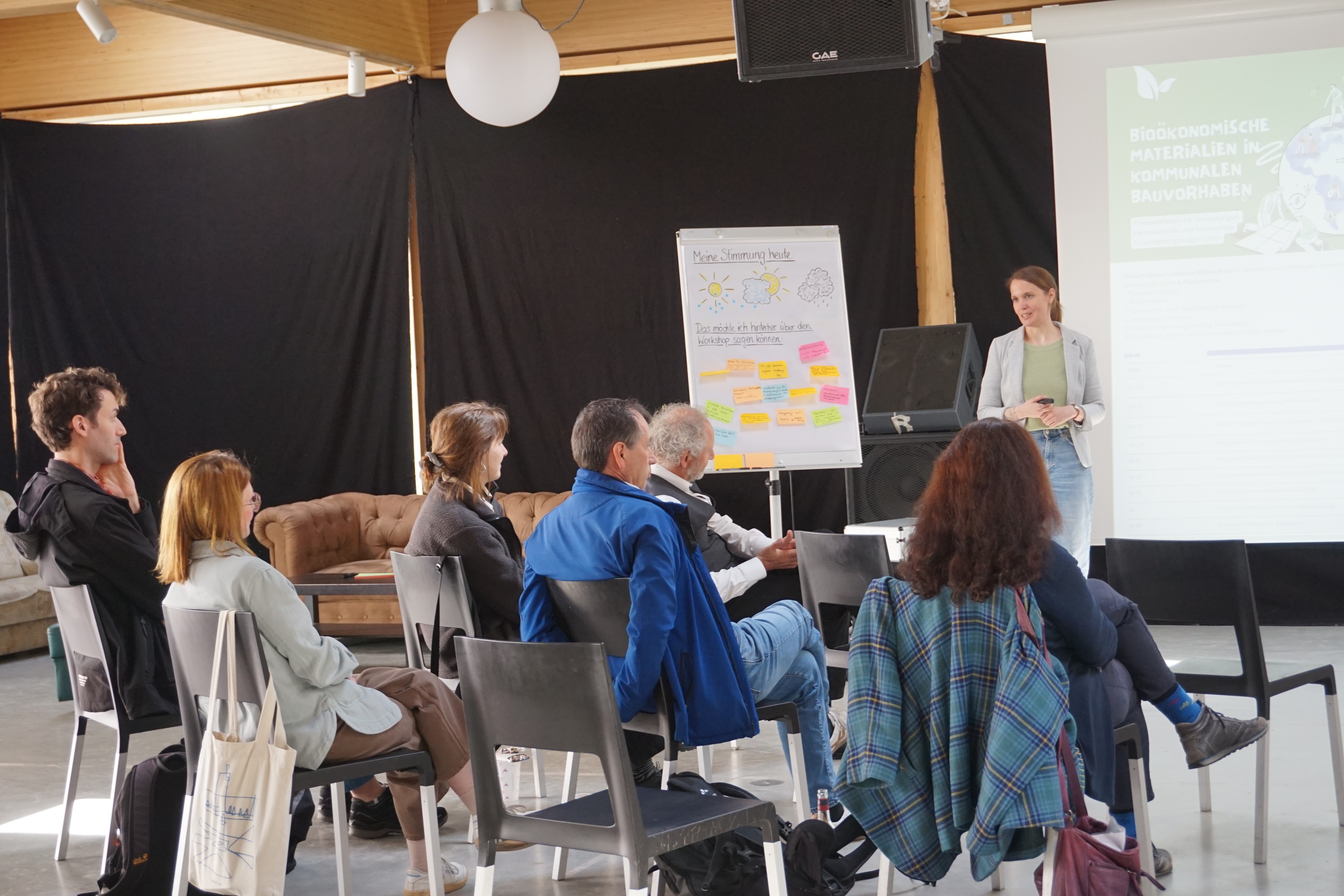
How can municipalities renovate their building stock in a sustainable and future-proof way? – This was the question addressed by participants at the natureplus expert workshop "From Renovation Backlog to Future Opportunity" (Image: natureplus/AnnaWenz)
Future.Building.Materials - Expert workshop for municipalities
From maintenance backlog to future opportunity: Municipalities discuss sustainable strategies for existing buildings
How can municipalities develop their building stock to be future-proof, despite tight budgets and ambitious climate goals? This question was the focus of a specialist workshop hosted by natureplus e.V. on April 23, 2026, at the Collegium Academicum in Heidelberg .
Representatives from municipal building departments—including those from Heidelberg, Mannheim, and Sinsheim—took the opportunity to engage in an in-depth discussion on strategies for the sustainable and cost-effective renovation of their buildings. The focus was not only on how to renovate, but above all on the steps that should precede any planned renovation.
Understand the existing stock before taking action
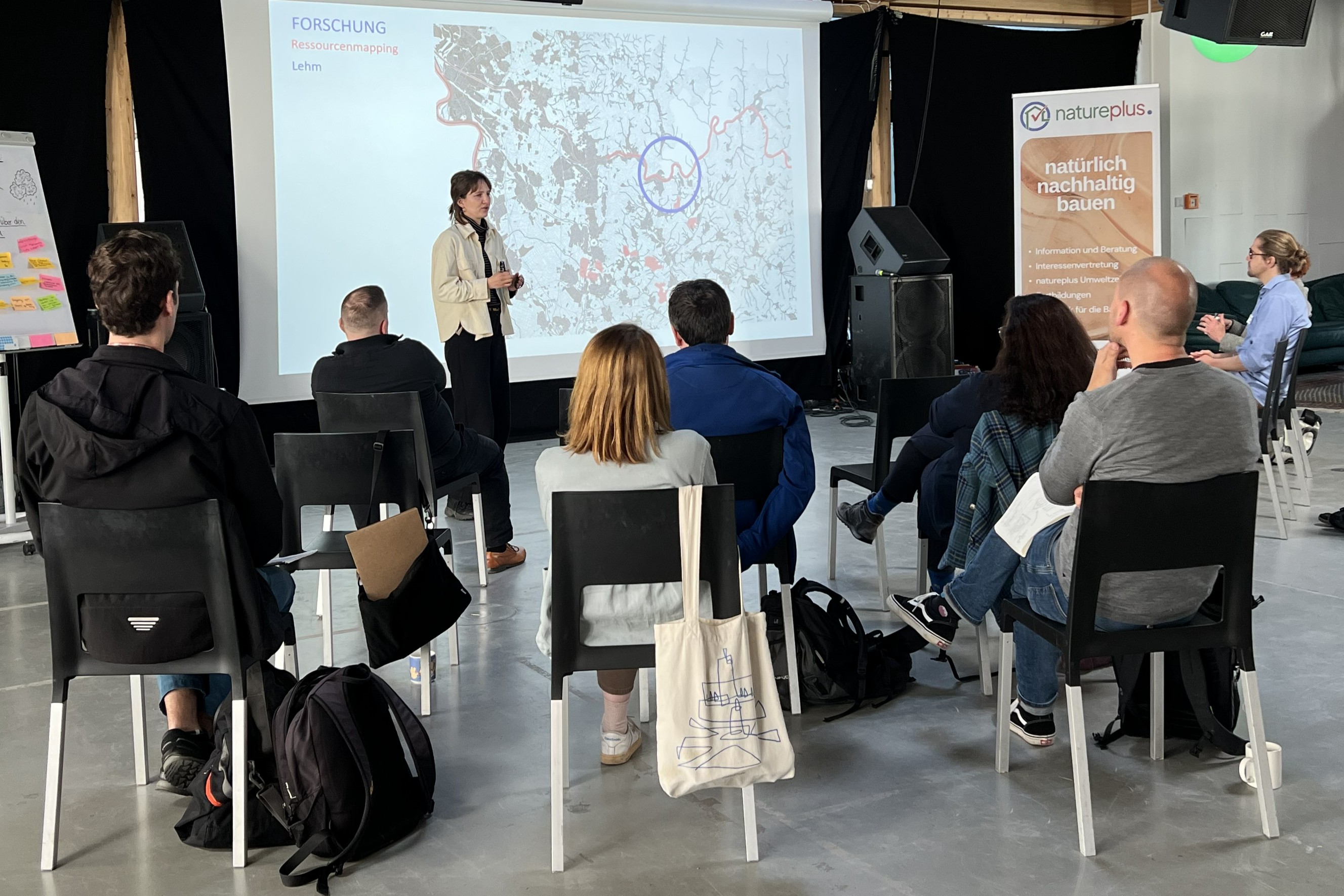
A key impulse came from the research project and real-world laboratory "Re:Source Neckargemünd". The analysis of the municipal building stock by students from the Natural Building Lab at TU Berlin demonstrated impressively that before planning any construction measures, it is worth taking a close look at the usage and occupancy of all existing buildings.
In their presentation, Selina Schlez from the Natural Building Lab and Steffen Feßenbecker, energy manager for the city of Neckargemünd, showed that there is significant potential within the existing building stock. Some municipal buildings are underutilized; in some cases, buildings could even become completely obsolete and be sold through better organization, multi-use, or space restructuring.
This insight was discussed extensively during the workshop. While it opens up significant potential for savings if buildings become obsolete, it also raises new questions: Which buildings are strategically relevant? And what risks arise when municipal properties are sold?
"A thorough analysis of the building stock is a huge help in saving costs later on and selecting measures in a targeted manner," emphasizes Tilmann Kramolisch, Managing Director of natureplus e.V. "This creates a clear picture of actual needs and a shared goal."
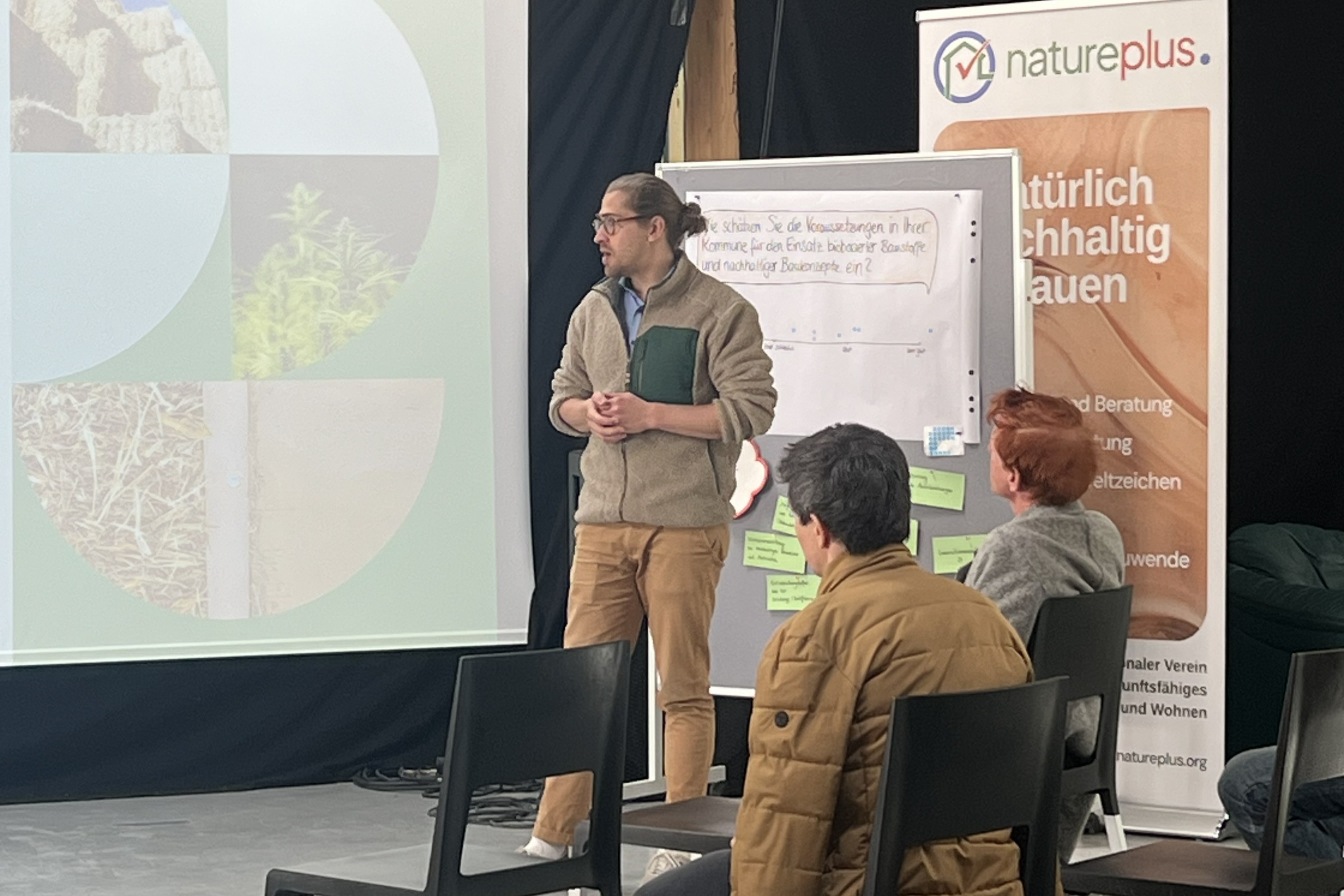
Steffen Feßenbecker sees a key driver for successful renovation strategies in goal setting and a shared vision: involving the municipal council from the very beginning. The vision for Neckargemünd was not developed by the research group alone, but in collaboration with the city council. "It was great to see how everyone pulled together in the end," said Selina Schlez, summarizing her impressions of the collaboration.
Rethinking renovation: less intervention, more impact
When requirements are clearly defined, planning efficiency increases: based on the results of the real-world laboratory, Neckargemünd is focusing on strategic prioritization rather than maximum optimization for its renovation measures. The project demonstrated that it is often more sensible to improve many buildings with targeted and highly transferable measures than to laboriously renovate individual properties down to the last detail. For similar building types, planning steps could be transferred and materials ordered in larger quantities, which reduces both effort and costs, the study concluded.
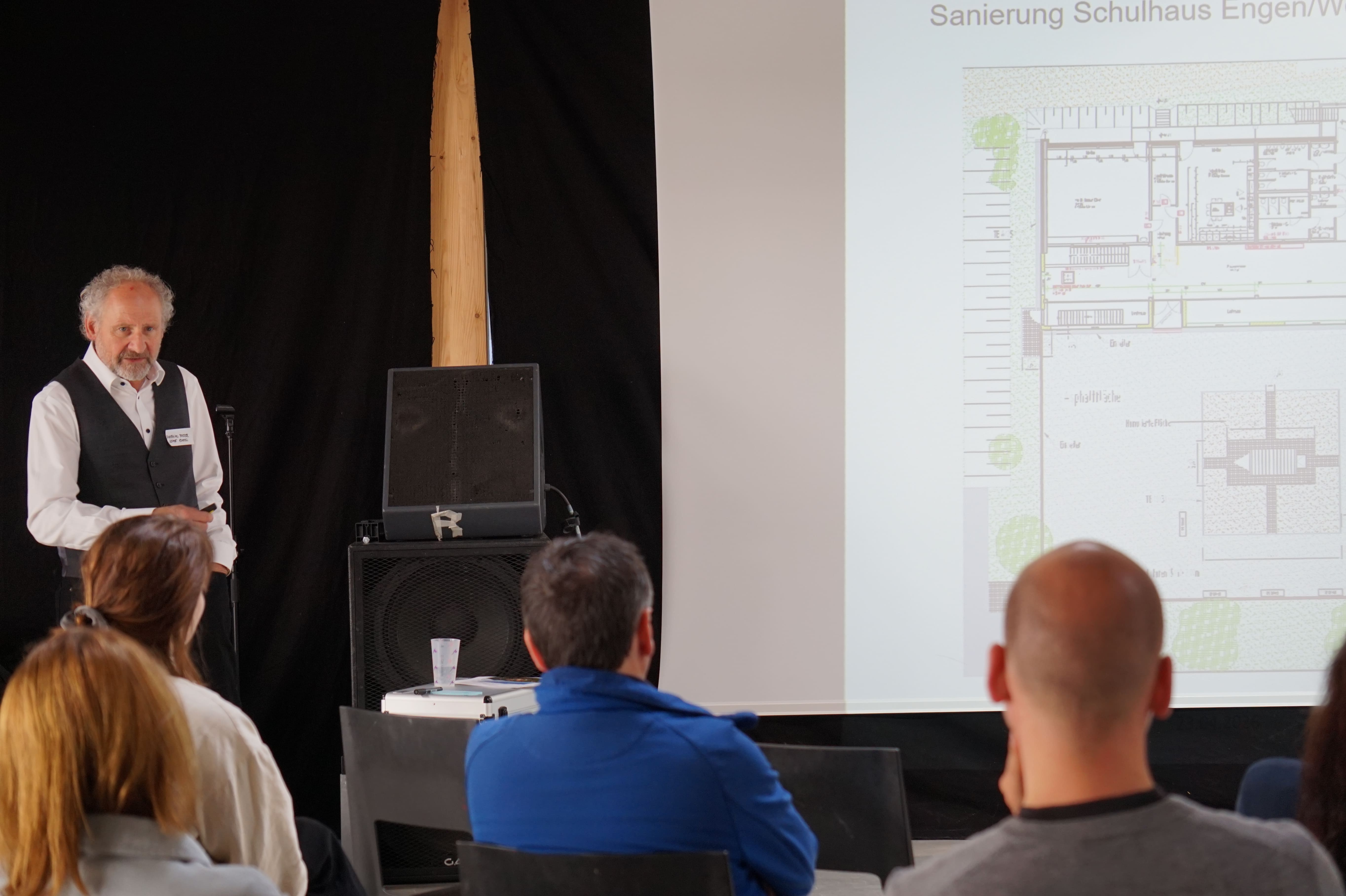
How the sustainable renovation of a municipal building can succeed in practice was made tangible through the best-practice example of the Welschingen primary school (City of Engen in the district of Constance). Matthias Distler, head of the municipal building department, presented the renovation of the school building, which was carried out while the school remained in operation. The focus was on a clear planning philosophy: preserving existing structures, choosing materials consciously, and designing constructions to be robust, economical, and demountable in the long term.
The combination of preserving existing buildings, using regional materials, and employing circular construction methods shows how sustainability can be integrated into municipal practice—without excessive technical effort. The result: a 1970s school building transformed into a modern learning environment with bright, well-tempered classrooms, an attractive wooden facade, and noticeably lower operating costs.
Funding landscape: complex, but with great potential
Another focus of the workshop was the financial framework. Because as convincing as many concepts may be, the final question remains: how can such projects be financed? Walter Orlik from the Heidelberg Climate Protection and Energy Consulting Agency (KLiBA) made it clear that municipalities can draw on a wide range of funding programs—from energy consulting to comprehensive renovation measures.
For example, energy consulting for non-residential buildings is subsidized by up to 50 percent. At the same time, the Federal Funding for Efficient Buildings (BEG) offers various grant and loan programs specifically tailored to municipal renovation projects.
Despite these opportunities, the workshop made one thing clear: the funding landscape is complex, and finding the right pots of money for specific projects is a challenge. This is precisely where regional advisory services play a vital role. For example, municipalities in the Rhine-Neckar region can leverage the support of KLiBA to identify suitable funding pathways and set up projects strategically.
Bioeconomy as a strategic approach for existing buildings
A common theme emerged across all presentations: there is immense potential in the existing municipal building stock if renovation is approached holistically, starting well before the actual planning of construction measures.
Bio-based materials can play a key role in this. They help reduce emissions, conserve resources, and strengthen regional value chains. However, it is crucial that they are not viewed in isolation, but rather selected and used strategically to complement the reuse of existing materials.
"Bioeconomy in construction doesn't mean just swapping out individual materials; it means rethinking the entire planning process," says Kramolisch. "It’s about preserving and reusing what already exists as much as possible—and where new materials are needed, opting for sustainable and regional solutions whenever possible."
Exchange as the key to the construction transition
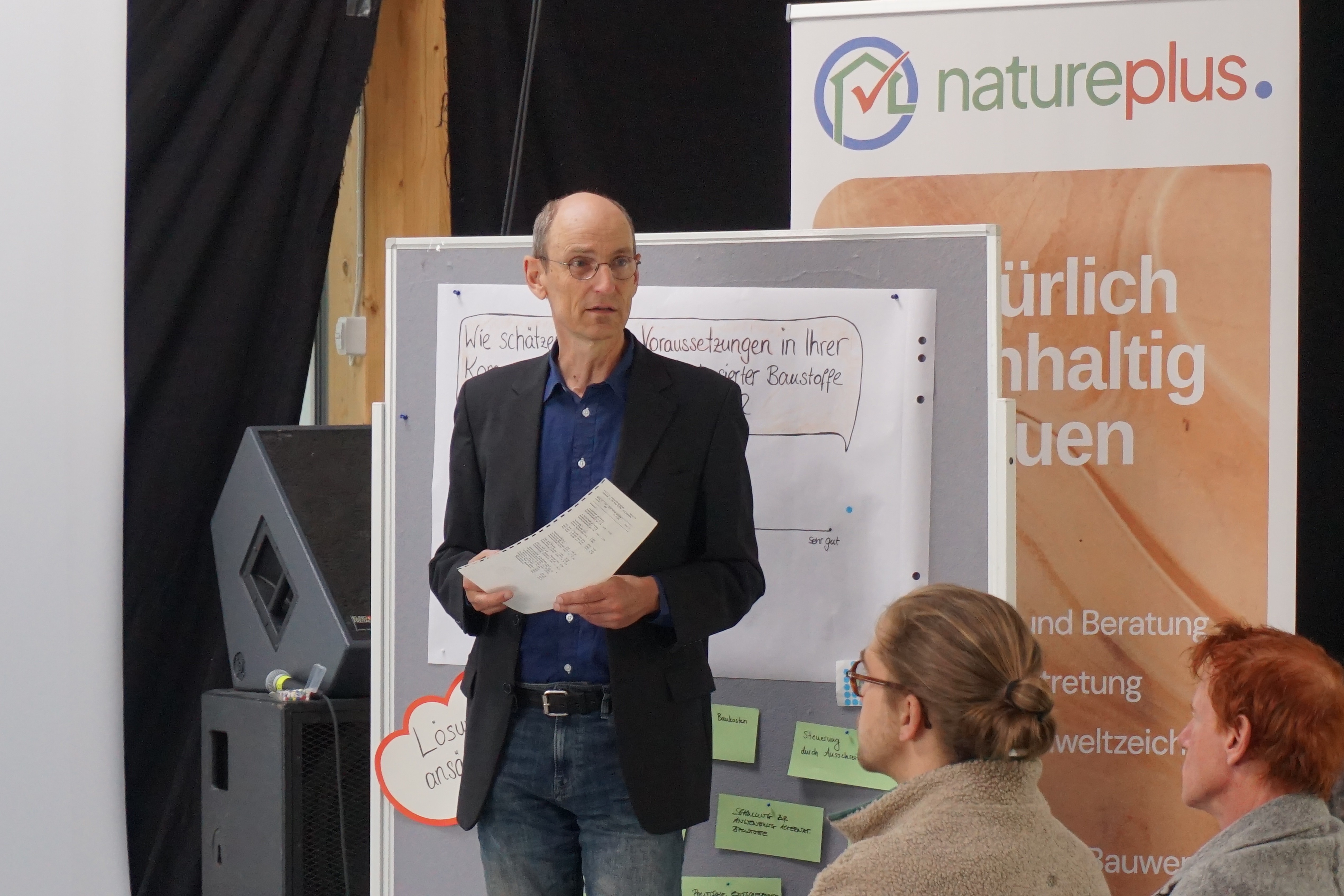
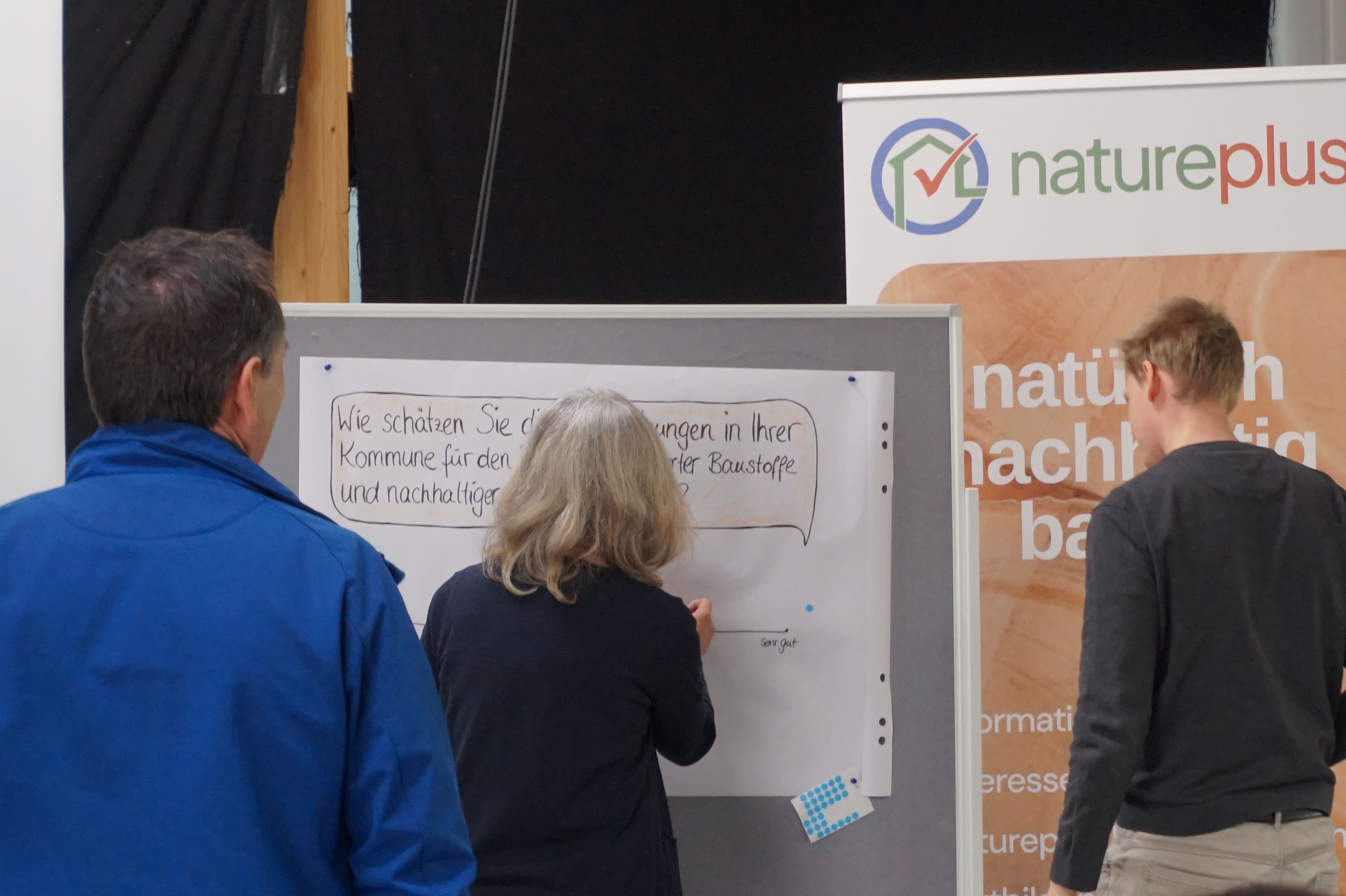
Beyond the expert insights, intensive exchange was a central component of the workshop. Discussion rounds highlighted how varied the conditions for sustainable renovation concepts are across different municipalities. Participants identified several solutions, such as increasing knowledge transfer regarding resource-efficient construction methods and bio-based materials, using life-cycle cost analysis as a strong basis for argumentation, and leveraging the deliberate drafting of tenders as a powerful tool to steer construction projects in the right direction.
"The construction transition won't be achieved by individual projects alone, and it’s clear that the challenges facing municipalities are immense," emphasizes Kramolisch. "That’s why it’s so important for us to facilitate the exchange of experience and knowledge among experts. We were all the more pleased that our participants took advantage of this opportunity and engaged so actively in the discussions."
Practical guidance: Guidebook in preparation
To support municipalities in meeting these challenges, natureplus is developing a practical guide. It provides decision-makers with a step-by-step approach to sustainable ways of renovating existing buildings.
The guide offers a structured approach covering key planning stages—from analyzing existing stock and assessing needs to selecting materials and implementation. The goal is to simplify complex decision-making processes and systematically integrate bioeconomic approaches into municipal practice.
Once completed, the guide will be made available to municipalities and other interested parties free of charge.
Project Context
The event was held as part of the initiative "Bioeconomic Building Materials for the Construction Transition" , which is funded by the Ministry of Food, Rural Affairs and Consumer Protection of Baden-Württemberg. The goal is to move sustainable construction methods, and bio-based materials in particular, from niche status into widespread use.
Presentations and Information
Want to stay in the loop?
For more on the topic of the construction transition join our
- natureplus Late Lunch Sessions (held monthly online)
Become part of the network!
- Subscribe to newsletter and association news, building material expertise, and updates on other natureplus events!
- Follow natureplus on LinkedIn & Instagram to share and join the discussion!
- Become a member and actively help shape the construction transition!